Every company searches for ways to save money, but many ignore one of the most sensible solutions—a home energy assessment. Energy waste is typically a silent drain on income regardless of the size of your business—small shop, big office, manufacturing complex. Rising utility costs force companies to be aggressive about the energy economy.
By pointing up areas where a company may cut energy consumption, a home energy assessment helps to lower costs, boost sustainability, and streamline operations. Studies reveal that companies using energy-efficient strategies might yearly save up to 30% on utilities. Furthermore, SEAI grants Ireland give companies wishing to make investments in energy efficiency enhancements financial support.
Reducing costs and gaining from programmes like the SEAI One Stop Shop and SEAI insulation grants depends on knowing how best to maximise savings through a professional assessment. Let’s look at the tactics companies might employ to maximise an energy audit.
1. Identifying Energy Waste and Reducing Utility Bills
Many companies unintentionally waste energy because of ineffective insulation, antiquated appliances, or bad lighting. By identifying these inefficiencies, a professional home energy evaluation helps companies implement focused adjustments that result in quick savings.
Studies have found, for instance, that switching to LED lighting lowers energy use by up to 75%, while boosting insulation helps to minimise heating and cooling costs by 20–30%. Businesses can find out from an energy audit where energy is being lost—from ineffective HVAC systems to air leaks in windows.
2. Accessing SEAI Grants and Financial Incentives
One of the main benefits of doing a house energy evaluation is getting cash incentives. Irish SEAI grants provide significant help for companies making energy-efficient renovations.
By offering end-to-end solutions, the SEAI One Stop Shop helps companies apply for funding, schedule energy-saving projects, and finish retrofits, thus simplifying the process. Grants covering a sizeable portion of the upgrade expenses help companies invest in insulation, heat pumps, or renewable energy sources.
Furthermore, asking for funding and demonstrating energy efficiency improvements depend on businesses knowing their energy rating, which SEAI BER search helps them to grasp.
3. Enhancing Insulation for Long-Term Savings
Particularly in older buildings not built with efficiency in mind, poor insulation is a main factor driving high energy expenditures. An evaluation of a home’s energy use offers suggestions for enhancement and measures of insulation quality. SEAI insulation assists companies in financing insulation improvements covering sectors including:
- Roof and attic insulation to reduce heat loss.
- Wall insulation—internal and outside—to maximise energy retention.
- Floor insulation stops energy leakage.
One of the best long-term investments available to companies trying to save money since properly insulating a building may cut heating and cooling costs by up to 50%.
4. Upgrading to Energy-Efficient Heating and Cooling Systems

Heating and cooling account for a sizeable portion of a company’s energy costs. A home energy inspection can reveal ineffective or antiquated HVAC systems that waste too much electricity. Changing to energy-efficient boilers or modern heat pumps will reduce energy usage by forty per cent. Companies can also use SEAI funding to assist with these improvements, lowering the cost of the changeover.
Over time, basic techniques such as consistent heating and cooling system maintenance, smart thermostat upgrading, and air leak sealing can also considerably lower expenditures.
5. Implementing Renewable Energy Solutions
A home energy evaluation offers an understanding of how a company may include wind turbines or solar panels. Creating their own energy helps companies reduce their reliance on the grid and slash running expenses for electricity.
Businesses installing solar panels in Ireland might benefit from government incentives and SEAI grants to help defray installation expenses. Apart from lowering expenses, solar energy enhances a business’s sustainability profile, which is becoming increasingly crucial to drawing in environmentally sensitive clients.
6. Improving Energy Efficiency Through Smart Technology
Smart energy management systems are becoming increasingly important in corporate operations. A home energy audit guides major energy savings by identifying which areas would profit from automation.
Among the main enhancements are:
- Intelligent lighting systems vary in response to occupancy.
- Automated HVAC systems help to control heating and cooling effectively.
- Energy monitoring program offering real-time consumption trend analysis.
Through smart technology, companies can make data-driven decisions and reduce wasted energy, enabling significant cost savings over time.
7. Conducting Regular Energy Audits for Ongoing Savings
Energy efficiency requires constant review and change; it is not a one-time project. Frequent energy audits guarantee companies remain on top of their energy use and reveal fresh savings potential. Businesses that commit to regular efficiency assessments typically achieve a 15–20% average energy cost decrease in the first year. Professional group energy audits and turn-key energy projects involving professionals guarantee that companies always maximise their energy consumption through partnerships.
8. Reducing Carbon Footprint and Meeting Sustainability Goals
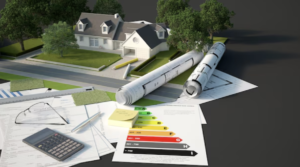
As climate concerns continue to grow, businesses are expected to take responsibility for reducing their environmental impact. A home energy assessment is a crucial step in identifying ways to lower carbon emissions while improving operational efficiency. Companies that take proactive measures in sustainability not only contribute to environmental protection but also align with regulatory requirements and industry standards.
Conclusion
One of the best strategies for companies to get government funding, lower costs, and increase efficiency is a home energy evaluation. Businesses can save utility costs by up to 30% by spotting energy waste, improving insulation, funding energy-efficient heating and cooling, and including smart technologies.
Initiatives include SEAI grants in Ireland, SEAI insulation grants, and the SEAI One Stop Shop also help to make these improvements reasonably priced financially. Investing in energy efficiency creates a more sustainable, future-proof company than only helps you save money.
For businesses ready to take control of their energy costs, an expert home energy assessment is the first step. Find out how your company can benefit from tailored energy solutions by visiting Celtic Dynamics today.
Ready to secure funding for your energy-saving projects? Book a call with Celtic Dynamics to discuss the details further and receive a customised quotation. Our Energy Grant Applications service is designed to enhance your chances of success in securing grants for your energy initiatives.