What is an Energy Master Plan?
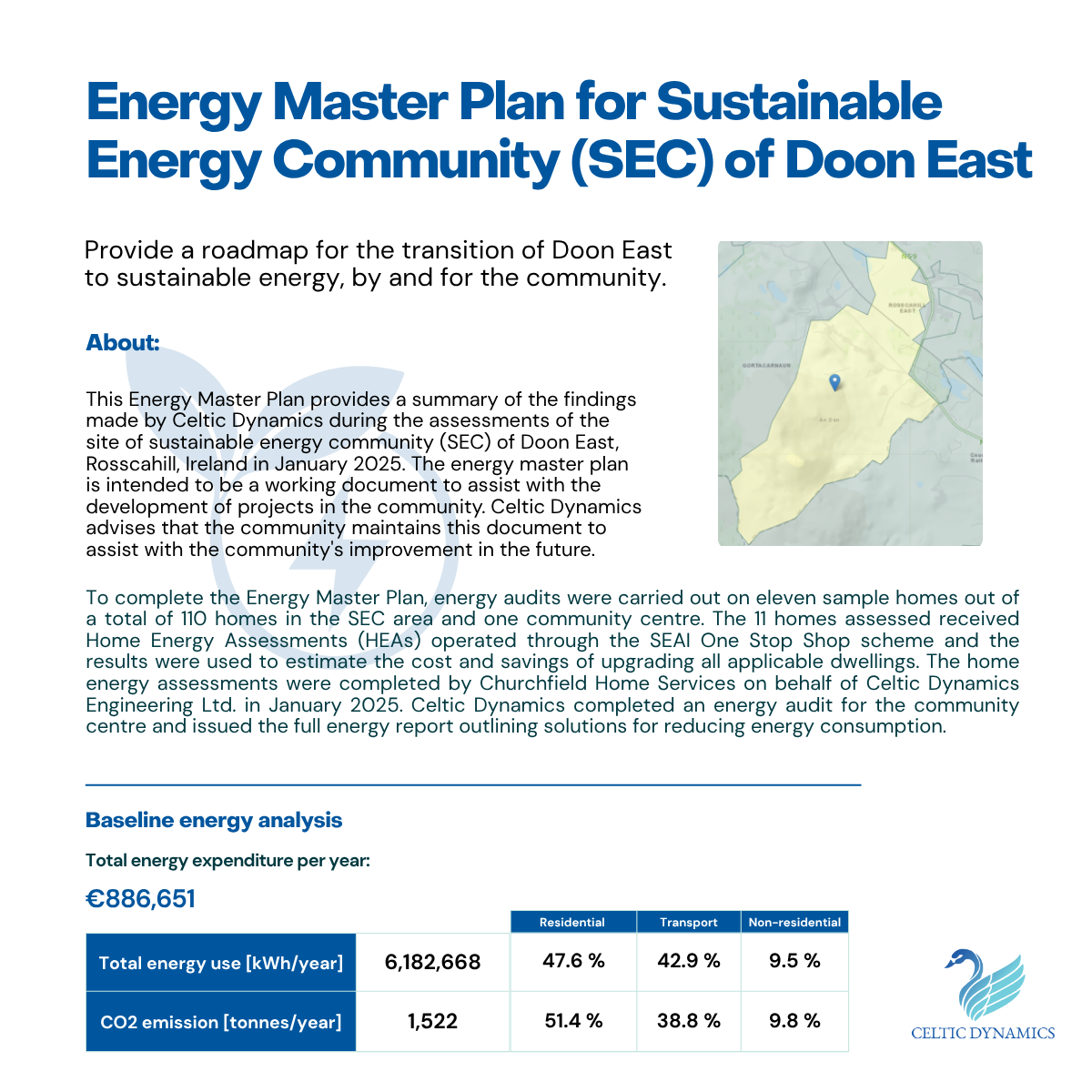
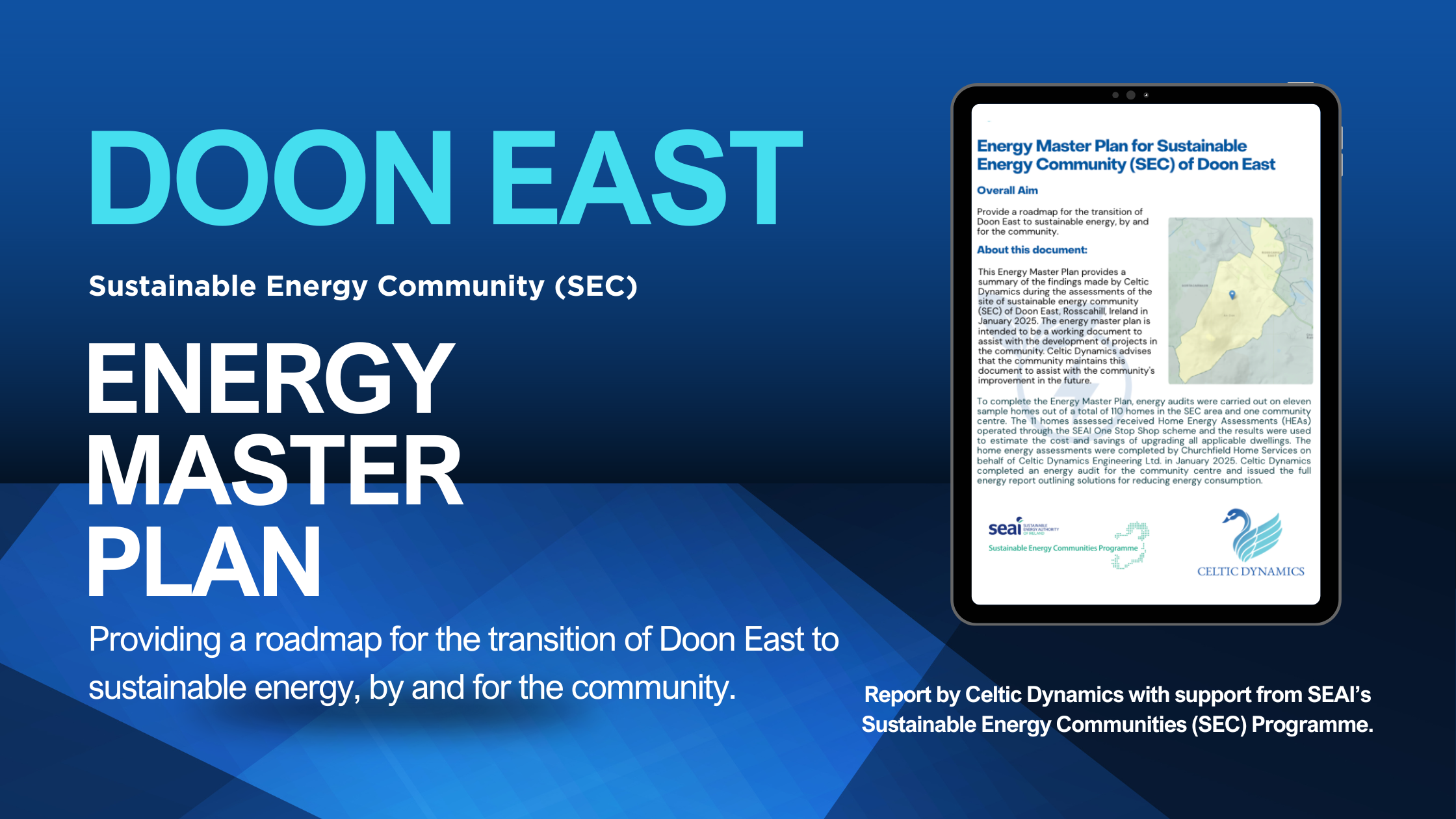
At its core, an Energy Master Plan (EMP) is a structured document that captures how energy is currently used in a specific community, and identifies where improvements can be made. It doesn’t just focus on technical upgrades, it helps communities prioritise actions, plan investment, and understand where the greatest gains can be made. For residents, it offers clear information about the types of upgrades that are suitable to their homes and transport needs. For local groups and stakeholders, it provides a foundation for funding applications and a framework for project delivery.
Download the Energy Master Plan Summary here.
Doon East’s Local Energy Challenges and Opportunities
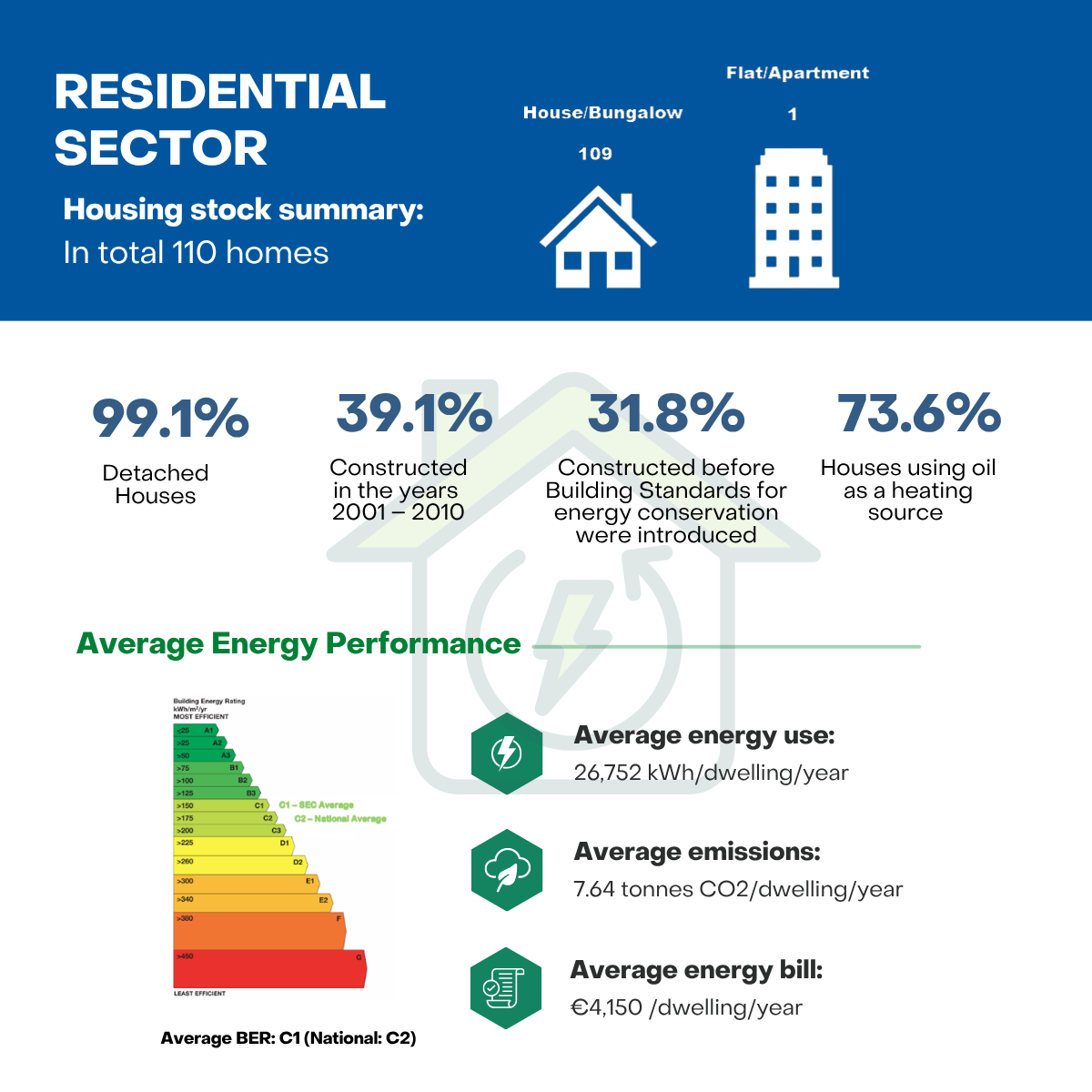
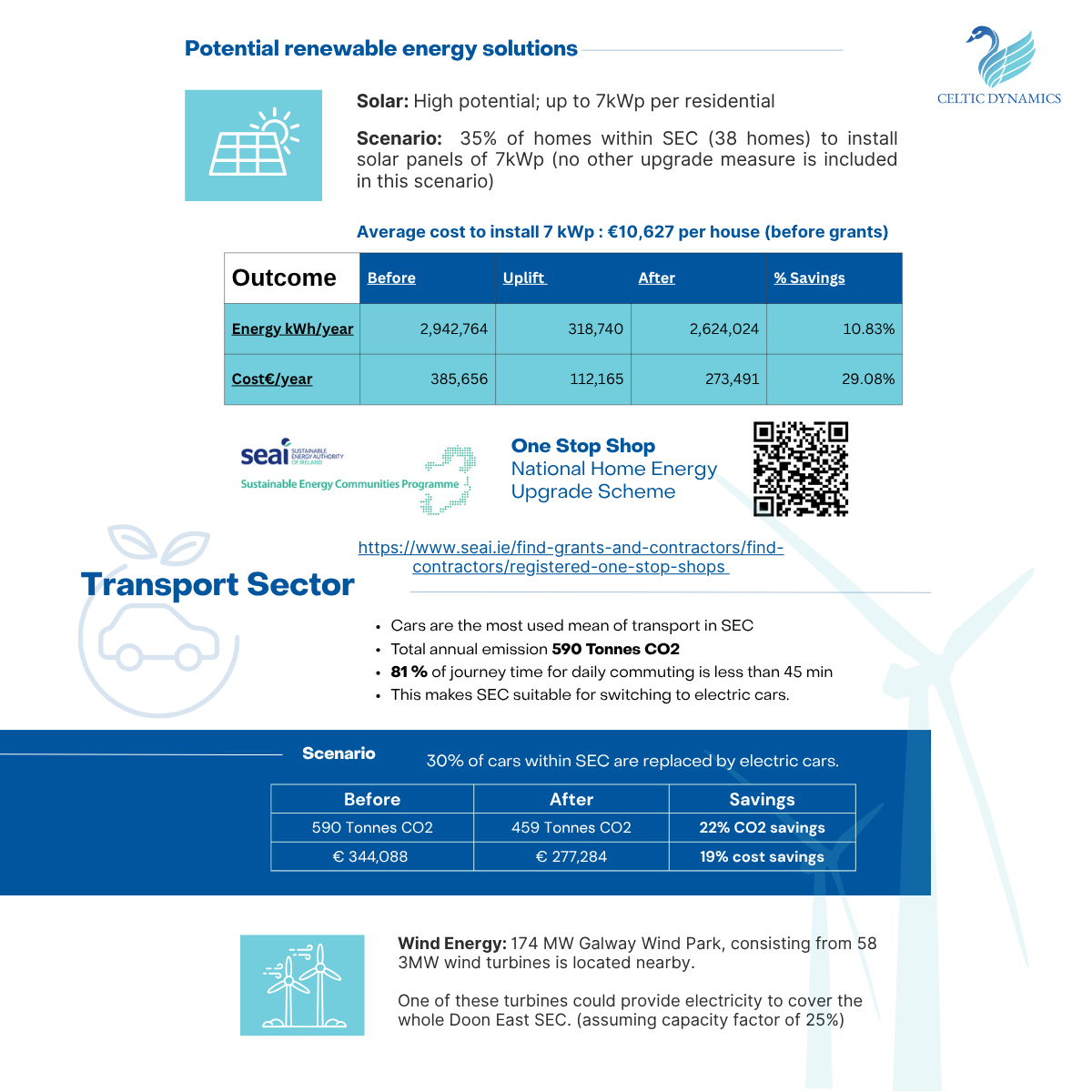
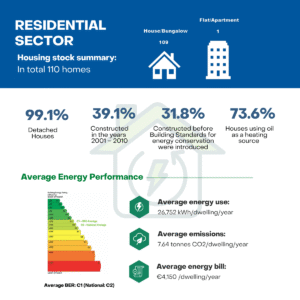 In Doon East, the baseline energy analysis showed a community with a strong foundation but significant opportunity for improvement. Most of the local housing stock is detached and owner-occupied, which bodes well for future retrofitting. However, many homes still rely heavily on oil for heating and were built before current building regulations took effect, meaning there is considerable scope for upgrades. Transport, too, plays a major role in the area’s energy footprint, with most households owning two or more cars and making relatively short daily journeys – a pattern that presents a clear case for switching to electric vehicles.
Residential Energy Use and the Path to Retrofitting
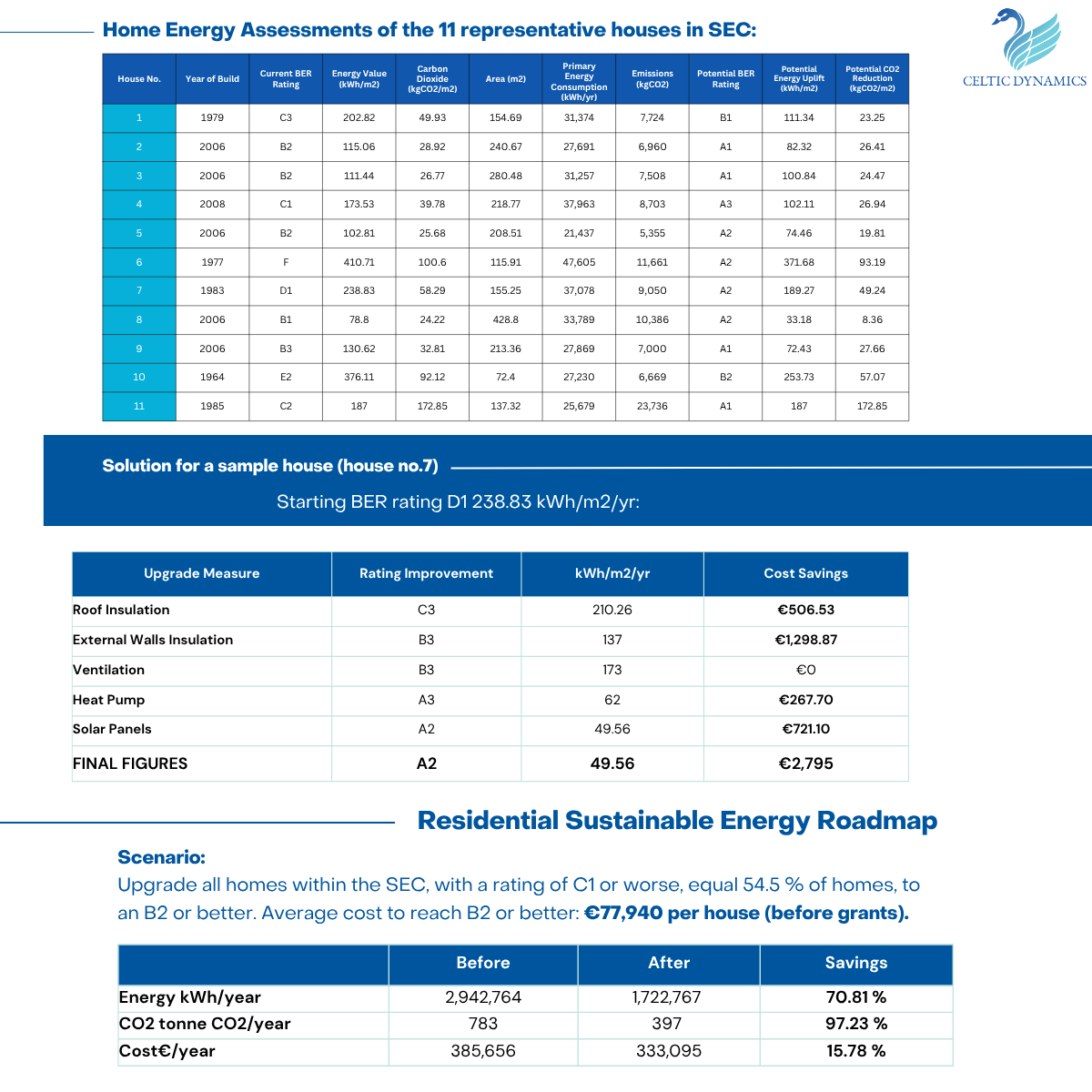
The residential section of the plan highlights the everyday reality of energy use in the home – from how heat is retained or lost, to the types of systems used for space and water heating. By carrying out in-depth assessments on 11 homes of different sizes, ages, and construction types, the team was able to model a range of retrofit scenarios. This allowed the community to understand the typical upgrades that would have the most impact, such as adding insulation, upgrading windows, replacing oil boilers with heat pumps, and installing solar panels. In each case, the plan outlines what improvement could be expected, along with potential savings and grant support available through SEAI schemes.
Creating a Local Energy Roadmap for Doon East
From this, the plan presents a Residential Sustainable Energy Roadmap, a forward-looking guide for how the Doon East SEC could approach upgrading its homes over the coming years. This includes both individual actions homeowners can take and potential collective projects such as group retrofitting schemes or bulk solar installations. The roadmap doesn’t expect every home to be upgraded overnight. Instead, it shows how the community can build momentum by starting with the most common or cost-effective measures, and then expanding efforts as capacity and funding allow.
Exploring Renewable Energy Solutions for Rural Ireland
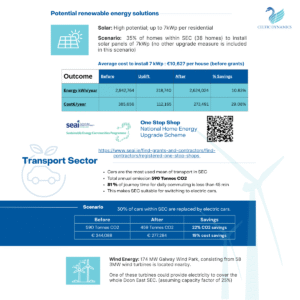
One of the key findings of the plan is the strong potential for renewable energy solutions in the area. Solar photovoltaic (PV) systems, in particular, were identified as a highly suitable option for many properties in Doon East. The plan outlines how rooftop solar could play a significant role in reducing the area’s electricity demand, particularly if uptake is supported through available grants and guidance. In addition, the community centre was found to be a good candidate for solar generation, offering opportunities to reduce its running costs and improve long-term sustainability.
Looking further afield, the presence of Galway Wind Park just outside the catchment highlights the role of regional renewables in supporting local decarbonisation. With national infrastructure in place, Doon East has the opportunity to align its energy use with cleaner electricity sources and strengthen its role in Ireland’s broader climate ambitions.
Local Climate Action Backed by Community and Data
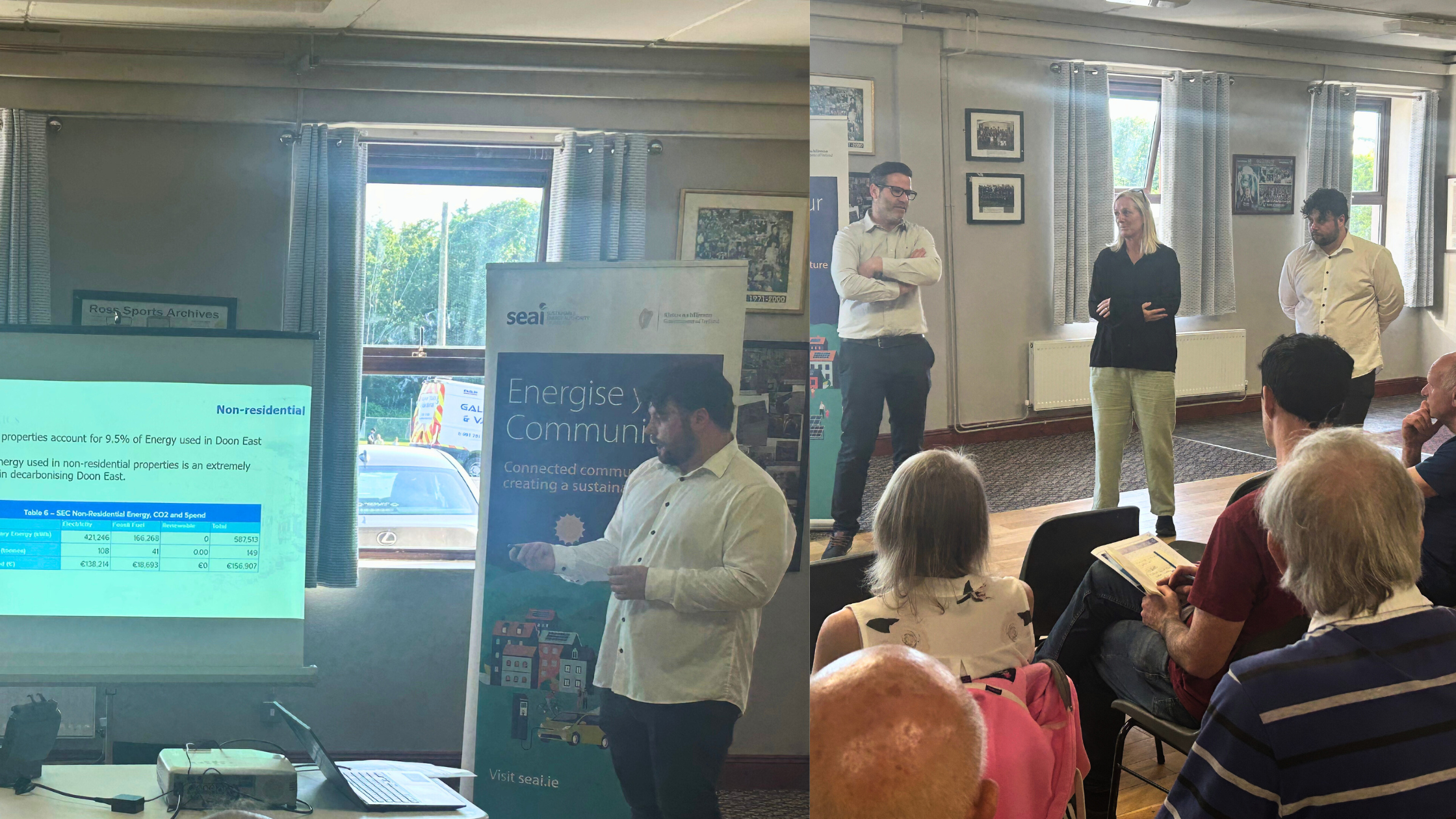
The Energy Master Plan was launched at a well-attended community event in Killannin Community Centre, where residents heard directly from the project team and guest speakers, including representatives from SEAI and Churchfield Home Services. The evening offered a chance to discuss the findings, explore funding options, and take part in one-to-one Home Energy Clinic sessions. The strong local turnout reflected the community’s growing interest in taking practical action on energy and sustainability.
 The Energy Master Plan is now available to view in a four-page summary booklet designed to be practical and accessible for residents. It outlines key findings from the audits, suggested retrofit measures, and links to available supports and grants. We encourage community members, stakeholders, and sector partners to review the material and engage with the next phase of action.
Download the booklet here or scroll to the bottom of this article for images.
Dylan Walsh CEO of Celtic Dynamics, who helped lead the project, explains:
“An Energy Master Plan gives communities like Doon East the information they need to make smart, sustainable choices – whether that’s upgrading homes, switching to electric vehicles, or planning solar installations. It’s not a one-size-fits-all model. It’s built on real data, from real households, with local input at every stage.”
What’s Next for Doon East SEC?
The Doon East SEC continues to meet regularly and will use the plan as a springboard to develop future projects, apply for grants, and engage more households in the process.
About the Sustainable Energy Communities Programme
This work is part of the SEAI’s Sustainable Energy Communities (SEC) programme, a national initiative that supports communities to reduce energy use and carbon emissions. The programme provides technical guidance, mentoring, and access to funding to help SECs develop energy master plans and implement local solutions. There are now hundreds of SECs across the country – from small rural villages to large urban neighbourhoods – each working to shape energy systems that are cleaner, smarter and more local.