Overview
Ireland can’t build a sustainable future without reversing the decline in biodiversity. Nature isn’t a “nice-to-have” ecological extra, it is the life support system that underpins food, clean water, climate resilience, and the economy. Yet biodiversity is still widely treated as a remote issue, disconnected from day-to-day life and business decisions.
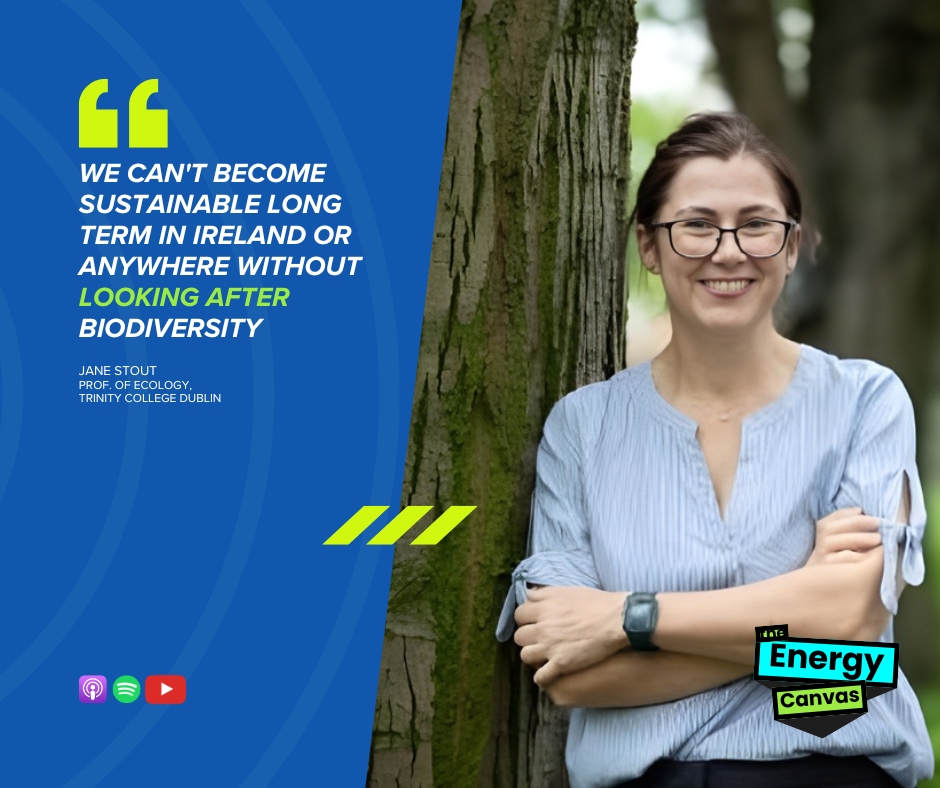
In this episode of The Energy Canvas, host Dylan Walsh, CEO of Celtic Dynamics, is joined by Professor Jane Stout (Trinity College Dublin), one of Ireland’s leading experts in ecology, pollinators, and natural capital. They break down what biodiversity actually means, why it matters to every organisation, and what practical, non-tokenistic action can look like, especially when it comes to pollinators and Ireland’s wild bees.
Listen Now
Watch on YouTube: The Energy Canvas – YouTube Channel
Listen on Spotify: The Energy Canvas on Spotify
Listen on Apple Podcasts: The Energy Canvas on Apple Podcasts
What We Cover
- What biodiversity means in plain terms, the variety of life and why it sustains us
- Why nature is not separate from climate action, it can be an ally in mitigation and adaptation
- The misconception that biodiversity is “not material” to business
- The real risks: supply chain disruption, compliance, reputation, and operational shocks
- Why biodiversity loss threatens Irish agriculture and productivity
- Pollinators explained, and why their decline is a warning signal
- Practical steps companies can take: on-site action, procurement choices, and staff engagement
- Why education and nature literacy matter across all ages, not just in schools
Key Takeaways
Biodiversity is essential infrastructure
It supports the basics. Food, water, shelter and the systems that keep our homes, health, and economy functioning.
Nature is a climate ally
Healthy ecosystems like bogs and wetlands reduce flood risk and store carbon, helping with both adaptation and mitigation.
Biodiversity risk is business risk
Even SMEs face exposure through supply chains, sudden shocks, insurance costs, reporting requirements, and reputational risk.
Pollinators make the crisis visible
Ireland has around 100 bee species, but only one is the managed honeybee. Roughly one third of wild bee species are at risk of extinction, with more than half in decline.
Start with risks and opportunities
The entry point for many organisations is a simple question: where do we depend on nature, and where do we impact it?
Biodiversity & Business: Not Optional
A major theme in the conversation is that biodiversity is often excluded from business strategy because it can feel indirect or difficult to measure. Professor Stout argues that this is exactly why it’s overlooked, modern supply chains hide the connection, but the dependency is still real.
Every organisation uses resources that ultimately come from nature and relies on communities who need healthy ecosystems to thrive. At the same time, businesses produce outputs (waste, emissions, pollutants) that affect ecosystems locally and globally. The result is a feedback loop: declining nature increases risk and volatility, and volatility hits businesses first through cost, availability, and disruption.
For SMEs in particular, Professor Stout recommends framing biodiversity through the same lens businesses already understand: risk and opportunity. From insurance and compliance to supply continuity and community trust, biodiversity is already embedded in financial outcomes, whether or not it’s recognised in strategy.
Pollinators: A Practical Place to Start
Pollinators are a clear example of biodiversity’s value because their role is tangible: without pollinators visiting crops and wild plants, yields fall and ecosystems weaken. But Ireland’s pollinators are under serious pressure, facing habitat loss, reduced food sources, pollutants, and the additional stress of climate change.
Professor Stout highlights that action doesn’t need to be complicated. Organisations can support pollinators by making space for nature, even in small urban areas, and by reducing avoidable harms in procurement and land management. Importantly, she notes that local actions can feel small, but if widely adopted across businesses and communities, they add up to meaningful national impact.
Where to Start
For businesses unsure how to begin, Professor Stout points to Business for Biodiversity Ireland, a national platform designed as a practical entry point, especially for organisations without internal expertise. Its Discovery Track helps companies move from awareness to action.
Guest: Professor Jane Stout
Professor Jane Stout is Vice President for Biodiversity and Climate Action and Professor of Ecology at the School of Natural Sciences, Trinity College Dublin. Her expertise covers biodiversity and ecosystem services, natural capital, and pollination ecology. She is a co-founder and deputy chair of the All-Ireland Pollinator Plan and a co-founder and former Chair of the Board of Directors for Natural Capital Ireland.